You are moving USDC on one network, swapping tokens on another, and using a lending protocol on a third. The transaction looks routine until the wallet asks you to approve a contract with unfamiliar permissions. In that moment, the main security problem is not simply whether your private key is encrypted. It is whether you can understand what the transaction will do before an irreversible signature is produced.
That distinction matters for anyone comparing a multi-chain wallet with a simpler single-network wallet, a hardware wallet, or a bare browser extension. Rabby is designed for Ethereum and other Ethereum Virtual Machine, or EVM, chains, and its value proposition is less about making risk disappear than about placing more transaction context in front of the user. The useful question, therefore, is not “Is Rabby secure?” in the abstract. It is “Which parts of DeFi risk can a wallet help me recognize, and which remain my responsibility?”
The security problem is usually a decision problem
A cryptocurrency wallet is often described as a key manager. Technically, that is important: the wallet helps control private keys and use them to sign messages or transactions. But in daily DeFi activity, the more difficult task comes before signing. A user must identify the network, contract, token, recipient, allowance, and economic effect represented by a bundle of technical data.
A blockchain transaction is not like a card payment with a universally readable merchant name and a guaranteed reversal process. A decentralized application may ask for a token approval, an exchange, a liquidity deposit, a bridge transfer, or a governance vote. Some actions are harmless but confusing; others can give a contract broad authority over assets. The same wallet address can also exist across several EVM networks, while the assets and contract behavior on those networks remain separate.
This creates a non-obvious security boundary: a wallet can improve the quality of the information available at signing time, but it cannot make an unsafe protocol safe. A warning may identify a suspicious contract, yet a determined user can still approve it. Conversely, a familiar application can become risky if its front end is compromised, its contract contains a flaw, or the user selects the wrong network. Wallet security is therefore partly software security and partly human-computer interaction.
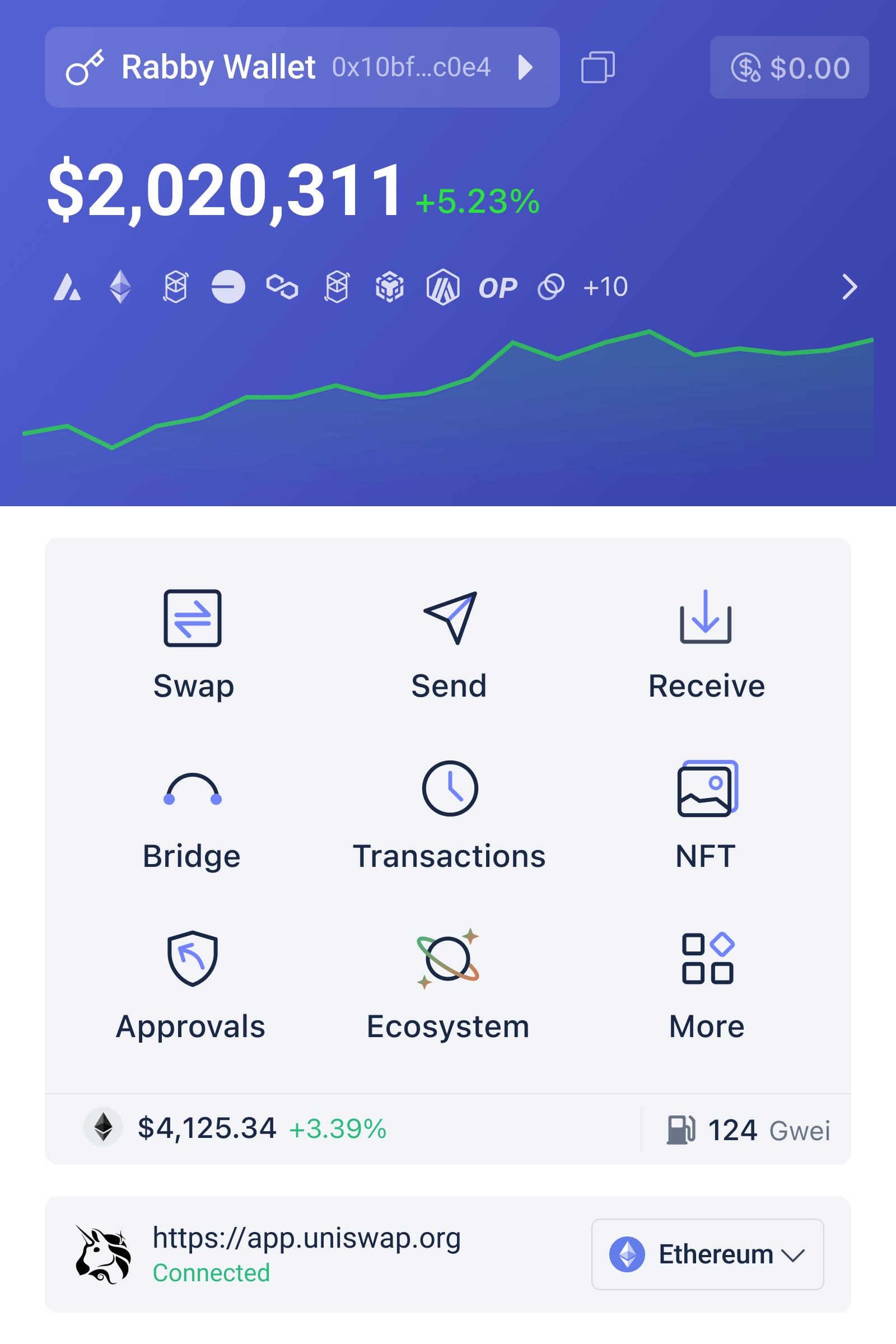
Rabby’s approach is relevant because it aims to support transaction simulation and pre-signing review within a multi-chain workflow. These features can help a user inspect expected balance changes, approvals, and network context before confirming an action. That is a meaningful improvement over blindly accepting opaque hexadecimal data. It is not a guarantee of correctness: simulations depend on available information and may not capture every external condition, later state change, or malicious outcome.
Rabby compared with other wallet approaches
Rabby versus a basic browser wallet
A basic browser wallet can be perfectly adequate for holding assets and signing standard transactions. Its advantage is familiarity and broad compatibility. Many DeFi users already understand its interface, and developers often test against widely used browser-wallet standards.
The trade-off appears when a user interacts with several protocols and networks. A minimal interface may show that a transaction is being requested without translating the call into a useful explanation of its likely effect. Users can then develop a dangerous habit: approve first, investigate later. A more context-rich wallet can reduce that friction by presenting warnings and expected outcomes before the signature.
That does not mean a richer interface is automatically safer. More information can also create false confidence. If a user treats a green indicator as a certification rather than one signal among several, the interface may encourage over-trust. The best practice is to use wallet warnings as evidence in a decision, not as a substitute for checking the protocol, domain, contract address, and requested permissions.
Rabby versus a hardware wallet
A hardware wallet protects signing keys by keeping them in a separate device, which can materially reduce exposure to some forms of malware and browser compromise. For substantial holdings, that separation is often a sensible layer of defense. It addresses a different problem from transaction interpretation.
Hardware security can make it harder for an attacker to extract a key, but it does not necessarily make a malicious transaction understandable. If a user confirms an unlimited token approval or signs a deceptive message on a hardware device, the device may faithfully protect the key while the user authorizes the wrong action. The practical comparison is not Rabby or hardware security. For many users, the stronger model is a clear review interface combined with hardware-backed signing for funds that warrant it.
Rabby versus a single-chain workflow
A wallet focused on one network can reduce cognitive load. Fewer networks mean fewer opportunities to confuse similarly named tokens, misread gas requirements, or send an asset to an incompatible destination. This is a genuine advantage, especially for newer users or for portfolios that do not need cross-chain activity.
A multi-chain wallet offers convenience and a broader view of EVM activity, but convenience introduces another failure mode: context switching. The address may look identical while the chain is different. A token symbol may also be reused by unrelated contracts. Before every important action, users should confirm the chain identifier, the contract address, the asset denomination, and the destination. Multi-chain support expands capability; it also expands the number of states a user must track.
What Rabby can help you see—and what it cannot know
A transaction review system can be understood as a translation layer between smart-contract instructions and human decisions. It attempts to answer questions such as: Which assets are expected to leave the wallet? Which assets should arrive? Is an approval being granted? Which chain is active? Does the contract or interaction present a recognizable warning? This translation is valuable because most users cannot manually decode every contract call.
Yet the translation has boundaries. Simulation results describe an expected state transition under particular conditions. They do not prove that the contract is honest, that its code is free of vulnerabilities, or that the website has not redirected the user to a different application. Oracle failures, governance changes, upgradeable contracts, bridge dependencies, and front-end compromise can all sit outside the narrow question of what a transaction appears to do at one moment.
There is also a difference between a signature and a transaction. A wallet may be asked to sign a message that does not immediately move funds but could be used by an application or attacker in a later authorization flow. Users should treat unfamiliar off-chain signatures with the same seriousness as on-chain requests, particularly when the message is difficult to read or comes from an unexpected domain.
Approvals deserve special attention. When a token approval grants a contract permission to spend assets, the immediate transaction may not transfer the entire balance. The authorization can nevertheless create future exposure if the contract is exploited or the user later interacts with it under changed conditions. A useful habit is to distinguish the amount being moved now from the authority being granted for later. Those are separate risks, even when they appear in one workflow.
A practical installation and operating framework
For users deciding whether to install the Rabby browser extension, the safest starting point is source verification. Use the project’s official distribution path rather than a search advertisement, unsolicited message, or copied download page. If you are seeking the rabby extension download, inspect the publisher, browser permissions, and installation source before importing or creating an account.
Installation is only the first checkpoint. Create or import a wallet in a controlled environment, record the recovery phrase offline, and never enter it into a website, support form, screenshot tool, or chat. A browser extension can be secure while the user’s recovery phrase is exposed through phishing or poor storage. The phrase is the ultimate recovery authority; anyone who obtains it may not need to defeat the extension at all.
After installation, begin with a small amount and a low-consequence transaction. Confirm that the expected network is selected, compare the destination and contract addresses, and examine the projected balance changes. If the wallet reports an unexpected approval, a suspicious domain, or a result that does not match the action you intended, stop. “Retry” is not a security strategy when the original request is unclear.
A reusable decision rule is to separate four questions: identity, intent, authority, and exposure. Identity asks whether the site and contract are the ones you meant to use. Intent asks whether the transaction does what you think it does. Authority asks what future permissions you are granting. Exposure asks how much value is at risk if the protocol, key, device, or assumption fails. A wallet can assist with parts of all four, but none is fully automated.
For US users, this framework is also practical because DeFi interfaces often combine globally available protocols, unfamiliar jurisdictions, and rapidly changing token markets. Regulatory status, tax treatment, and consumer protections can vary by product and circumstance. A wallet does not determine whether an activity is legally available or financially appropriate. Operational security and compliance research are separate tasks.
What to watch as multi-chain wallets evolve
A recent Rabby project update presents the wallet as a general-purpose choice for Ethereum and EVM chains, including Chrome and Brave extension access. The important implication is not simply broader chain coverage. As users move across more networks, the quality of chain identification, transaction simulation, warning design, and permission management becomes more consequential. A wallet that supports many environments must make differences visible rather than hide them behind a uniform interface.
One plausible direction is that wallet competition will shift from basic account access toward better risk presentation. The question will be whether warnings remain understandable, timely, and resistant to alert fatigue. If every transaction produces a warning, users may learn to dismiss warnings mechanically. If warnings are too sparse, users may infer that unflagged actions are safe. The unresolved challenge is calibration: detecting meaningful risk without pretending that software can predict every protocol failure.
Users should therefore watch not only for new chain integrations, but also for improvements in permission controls, simulation transparency, domain verification, hardware-wallet compatibility, and explanations of uncertainty. The strongest signal would be a wallet that makes its assumptions visible: what it checked, what it could not check, and why a result may change. That kind of honesty is more useful than a blanket claim of security.
Frequently asked questions
Is a multi-chain wallet safer than a single-chain wallet?
Not automatically. A multi-chain wallet may provide better transaction context and convenient access to EVM networks, but it also creates more opportunities for network confusion, counterfeit tokens, and mistaken contract selection. Its safety depends on the quality of the wallet’s review tools and the user’s verification habits.
Does Rabby prevent malicious DeFi transactions?
No wallet can guarantee that. Rabby can help surface transaction effects, warnings, and network context, but simulations and detection systems have limits. Users still need to verify the application, understand approvals, protect recovery credentials, and limit the funds exposed to unfamiliar protocols.
Should I use Rabby with a hardware wallet?
For larger or long-term holdings, combining a readable transaction-review interface with hardware-backed key storage can address two different risks: misunderstanding an action and exposing a signing key. The combination still requires careful review, because a hardware device can securely sign an authorization that the user did not fully understand.
The central lesson is simple but easy to miss: DeFi security is not only about keeping a secret key away from attackers. It is also about reducing the gap between what a smart contract will do and what a person believes they are approving. A multi-chain wallet such as Rabby can narrow that gap, especially for users who regularly move across EVM networks. It cannot close it. The safest user is not the one who clicks fastest, but the one who can explain the transaction before signing it.